Playing with Flat and Solid Shapes
Here's What To Do
Lay out all the shapes on the surface. Ask your child to help sort the shapes into two groups: flat (2D) and solid (3D).
"Let’s see what we can create by combining flat shapes with solid shapes. Maybe we can make something that looks like a rocket, a bridge, or something totally new!"
Ask your child to stack or arrange the shapes. For example, place a flat circle on top of a cylinder to make a "drum" or use a triangle and a cube to form a "house." If something doesn’t work, let your child explore solutions.
Ask your child to show you their creation. Name the shapes together: "You used a rectangle and a cylinder to make this cool bridge!"
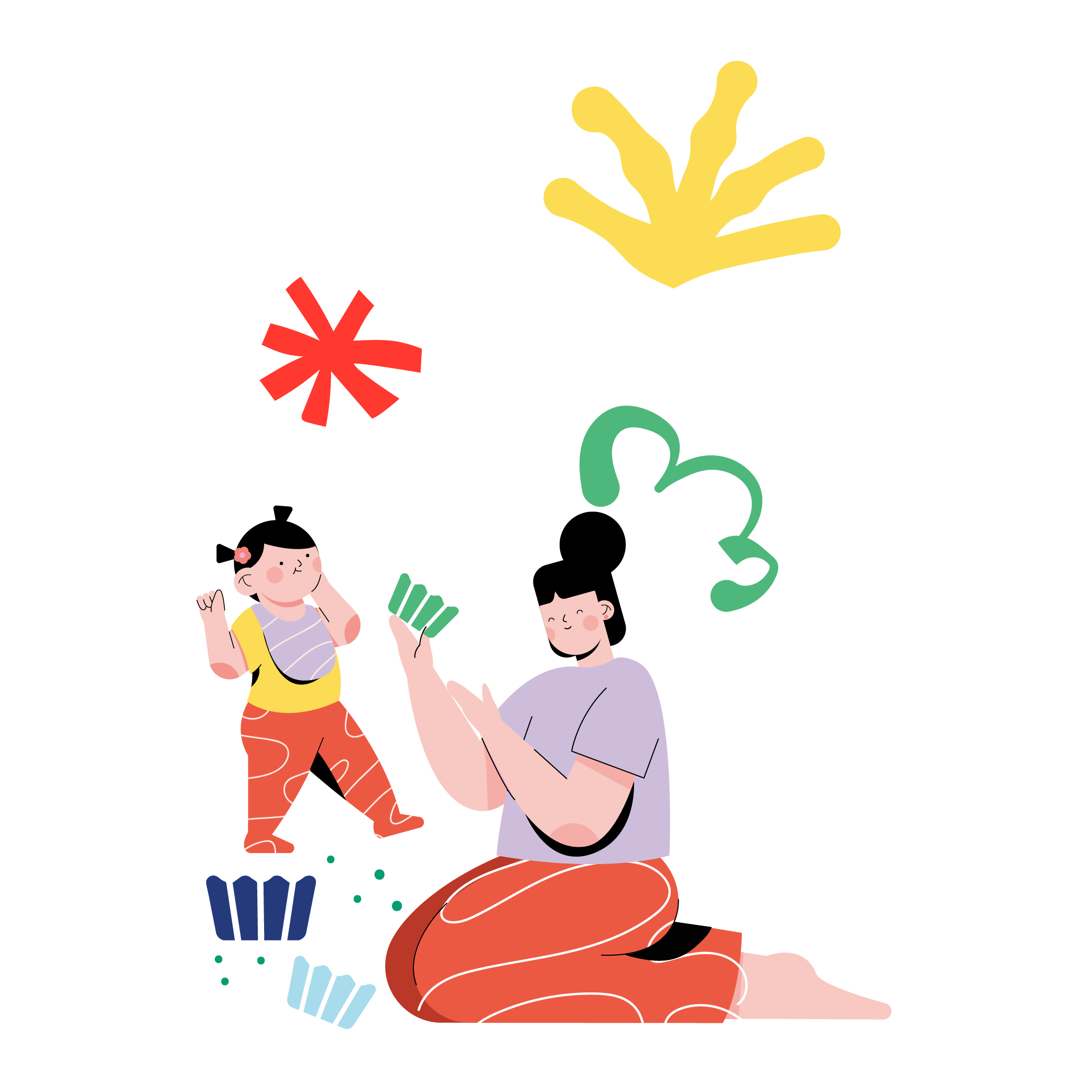
Put PEER Into Action
Pause:
- Put away all distractions and take a moment to stretch together.
Engage:
- "Why do you think some shapes balance better than others?"
- "What could you add or change to make your creation even taller or wider?"
Encourage:
- "What can we change to make the shapes balance or stay together?"
- "It’s okay if it doesn’t work right away—each try is making your creation even better!"
Reflect:
- "How did it feel to build something with both flat and solid shapes?"
Not quite ready?
Focus on stacking solid shapes only.
Ready for more?
Your child can build a specific object (e.g., a train or a castle) using both flat and solid shapes.
As your child masters this skill...
They will begin to understand how shapes can be combined to make new objects.