


Onset Rime With Gestures
Here's What To Do
Say a simple one-syllable word like “fish.” Help your child to say the beginning sound (onset) and the rime, or remaining sounds of the word e.g. “f-ish.”
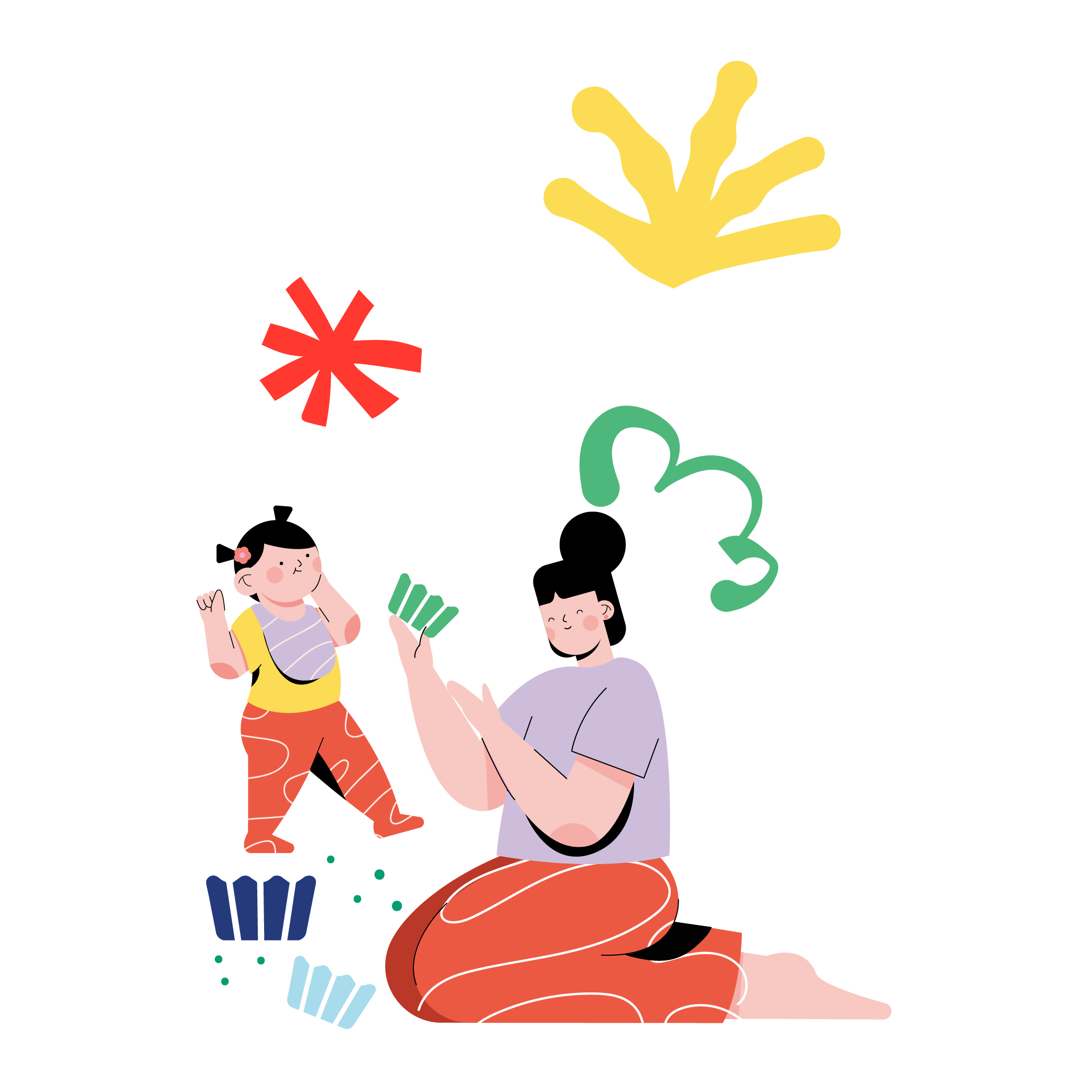
Use gestures or movements as you identify each part. You can hold out your left hand for the beginning sound (onset) then your right hand for the rime, or step your left foot out then your right.
If you want to say the word back together after, put your hands or feet together. “F-ish, fish!”
You can also do this as you say a fun short word while reading or running errands.
Put PEER Into Action
Pause:
- Invite your child to stand facing you, raising your arms slowly up and down.
Engage:
- “Let’s move our hands as we say the beginning sound and the ending sounds of some words.”
- “What’s the beginning sound in the word ‘cat?’ What are the ending sounds ‘c-___?’”
Encourage:
- Have your child repeat the word, then the parts of the word, after you.
- “You are listening carefully and working hard to say the parts of the word!”
Reflect:
- “Did it feel easy or hard for you to say the parts of the word?” (Acknowledge their feelings and efforts).
Not quite ready?
Use simple CVC (consonant-vowel-consonant) words like “bat, pen, sit.”
Ready for more?
Say the onset (beginning sound) and the rime (remaining sounds) and ask your child to blend them and say the whole word. Or, say the whole word and ask them to separate the word into those two parts.

As your child masters this skill...
They will identify the onset and rime of single-syllable words with assistance.